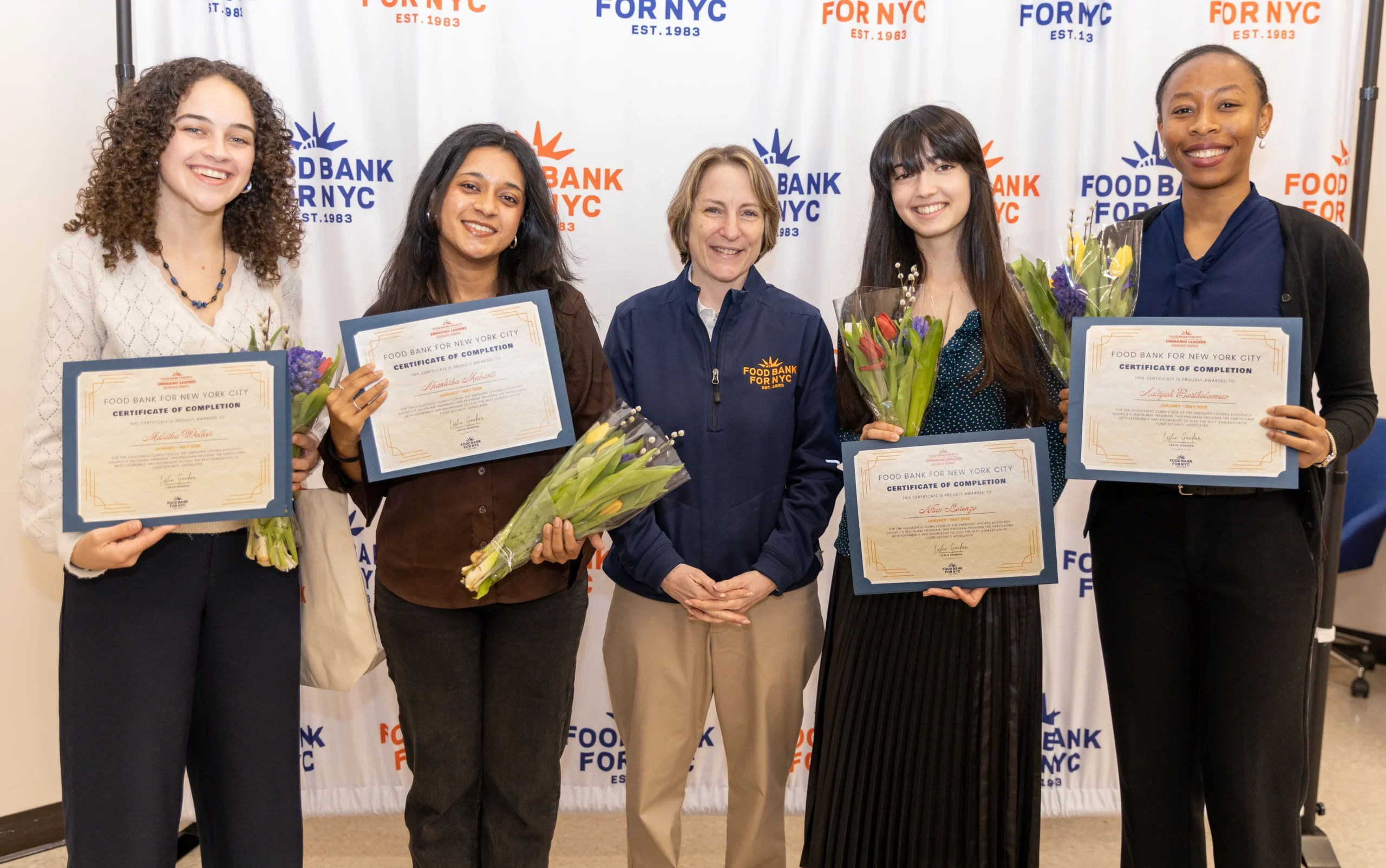
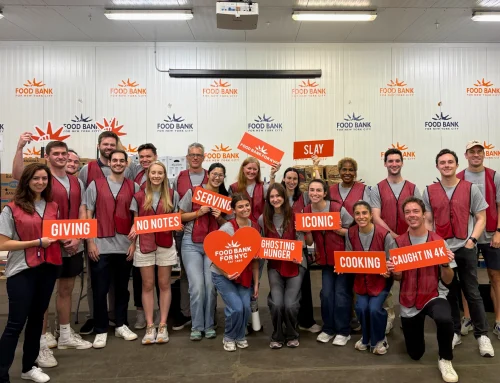
HARLEM, NEW YORK — On a bright spring afternoon, Food Bank For New York City gathered inside its Community Kitchen to celebrate the graduation of the inaugural Emerging Leaders Advocacy Council (ELAC) — a pilot program designed to help shape the next generation of food justice advocates across New York City.
But this was more than a graduation ceremony.
It was a room filled with young leaders already doing the work: organizing on college campuses, raising awareness around food insecurity, advocating for policy change, and helping connect students to resources too many don’t even realize exist.
Piloted by Food Bank For NYC’s Public Affairs team, ELAC was designed to place young people with lived experience at the center of advocacy and systems change. Students from colleges across the city spent the year learning about food policy, community organizing, civic engagement, and campus hunger — while developing and leading their own advocacy campaigns.
“The Emerging Leaders Advocacy Council was created to strengthen the connection between food insecurity, lived experience, and civic engagement by intentionally bringing college-age young adults into Food Bank For NYC’s advocacy work,” said Carmen Boone, Vice President of Public Affairs. “Many students and young New Yorkers are directly impacted by food insecurity yet are often missing from policy and systems-level conversations.”
Throughout the program, students organized awareness campaigns, led tabling events, conducted research with pantry coordinators, gathered petition signatures, participated in advocacy days at City Hall, and worked to ensure more students understood the food resources available on their own campuses.
The result: the cohort drove hundreds of petition signatures and advocacy actions tied to state and city budget campaigns while helping expand awareness around campus pantry access and student hunger.
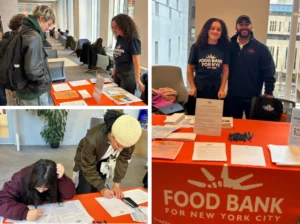
For Malaika Walker, a Pace University student studying Peace and Justice Studies, the work felt deeply personal.
“What motivated me to join is during senior lunch-ins and our community meals, I would come in once or two days a week very regularly because I grew up always volunteering,” she shared. “During COVID, the need was so high. I vividly remember lines of cars waiting for food. Seeing us run out while people were still in line was heartbreaking as a 14-year-old.”
Graduating inside Food Bank For NYC’s Harlem Community Kitchen carried an even deeper meaning for Malaika, whose family roots are tied to the neighborhood.
“My dad is originally from Harlem and taught as a public school teacher for kids with special needs in New York for a very long time. My grandfather did a lot of Black liberation work in Harlem. There’s a lot of history and legacy here.”
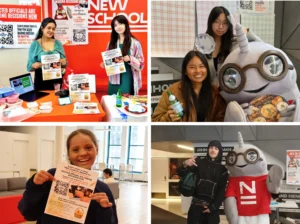
At Parsons School of Design, student advocates Niav Lorenzo and Akanksha Mahanti focused their project on expanding awareness around campus pantry access after discovering that many students did not even know the pantry existed.
“I think free food is a radical concept, especially when you’re a student pushed into a new world without your parents,” said Niav. “People still run out of dining points and skip meals all the time.”
Their campaign combined tabling events, social media outreach, petitions, and student engagement campaigns — including a mascot-led activation that helped spark conversations around hunger and campus resources.
“We wanted people to engage through curiosity,” Niav explained. “So many students know about food insecurity but aren’t informed about the resources they actually have.”
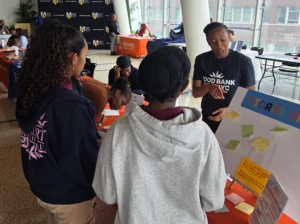
At Medgar Evers College, Aaliyah Bartholomew used storytelling and social media to help students understand both the case for advocacy and the realities so many of their peers face every day.
Through tabling events, blogs, student storytelling, and advocacy campaigns, Aaliyah focused on helping students feel seen while building stronger awareness around campus resources. For her, the work came back to one core truth.
“Food is the first medicine we put into our bodies,” she said. “If your basic needs are met, you will be able to achieve whatever you want. That’s where thriving happens. People don’t just focus on surviving anymore — they are able to thrive.”
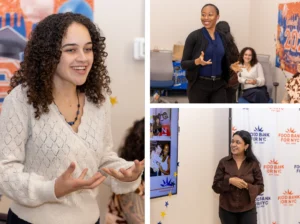
The graduation ceremony reflected both celebration and momentum. Students presented their end-of-year campaigns before receiving diplomas and bouquets, followed by remarks from Food Bank For NYC leadership on the road ahead.
“What gives me hope is the depth of commitment, leadership, and fresh perspective this cohort already brings,” Boone said. “These students are not waiting to become leaders in the future. They are already organizing, volunteering, conducting research, supporting their communities, and advocating for change today.”
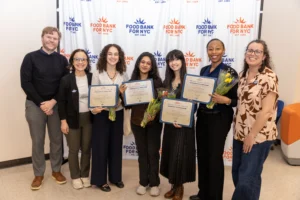
Food Bank For NYC President and CEO Leslie Gordon echoed that during remarks to the graduates.
“If this is our future, our future is really bright,” Gordon told the cohort. “You are forever a part of the Food Bank For NYC family. We need people like you.”
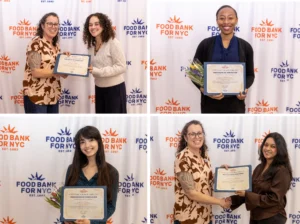
For the students, the experience was about more than advocacy training. It was about learning how to lead, organize, collaborate, and build community — while balancing school, work, and life.
“You have to come here with passion,” Aaliyah said. “But you also have to be diligent. You have to come ready to work, ready to learn, and ready to grow. If your heart is in the right place, take the leap, sign up, and come join the family. Waiting for you on the other side are open arms ready to teach you the Food Bank For NYC way.”
As the inaugural cohort officially became Food Bankers for life, the room carried a clear sense that this pilot program had grown into something larger: proof that the next generation of advocates is already here — and already leading.
These students are not waiting to become leaders someday. They already are.
The next generation of food justice is here. Learn more about ELAC and how to get involved.