Transcript:
Intro Narration:
“Closer Look” is a public affairs presentation. Opinions expressed by some of our guests may not reflect the views of K-LOVE, and some topics may not be suitable for children.
K-LOVE is committed to community. “Closer Look” continues now with a look at local agencies, events, and issues.
Peter Kaye:
Well, hello, and welcome to another edition of “Closer Look” for Port Chester and throughout New York City. I’m Peter Kaye. We’re taking a closer look at food insecurity. My very special guest is the associate director of operations at Food Bank For NYC. His name is Ronald Olaizola. Ronald, welcome to “Closer Look.”
Ron Olaizola:
Hey, Peter. Thank you so much. It’s a privilege and an honor to be on here.
Peter:
Really excited about this interview. Would you take a second and give us a snapshot of what the scale of hunger in New York City looks like and how the Food Bank responds to that need?
Ron:
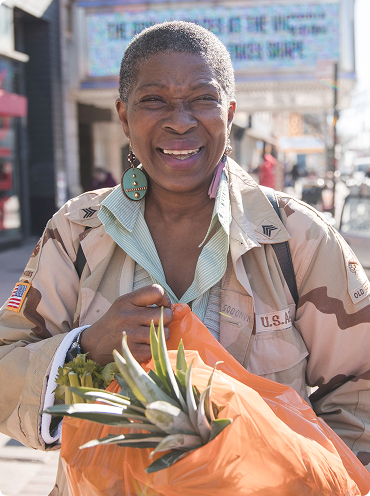
There are over 1.4 million New Yorkers facing food insecurity right now. Many of the people we serve are hardworking families struggling to make ends meet. Our pantry network is doing double the business compared to pre-pandemic levels. More than 1.8 million people in New York City currently rely on SNAP just to help buy groceries. Most of these people are working families with children, seniors, and veterans like myself. It’s a very serious situation. New Yorkers should not be going hungry, especially in one of the most affluent cities in the world.
Peter:
What effects has inflation had on food insecurity, and has that settled down any?
Ron:
Inflation has had a tremendous impact because the price of almost every food item is going up while salaries are not keeping pace. Families of four or five are now spending nearly double just to put the same type of food on the table as they were six or seven years ago. That’s where we come in—we try to bridge that gap.
Peter:
What is the difference between a food bank and a food pantry?
Ron:
A food bank serves a food pantry. The food pantry generally gets food from a food bank. We share the same mission, but food banks like ours support on a much larger scale. For example, we have more than 800 soup kitchens, pantries, schools, colleges, and healthcare partners across the five boroughs.
Peter:
So the mobile pantry is really the only time you get to see the end user, since you’re supplying the pantries—is that correct?
Ron:
Partly. We do interact with the end user at the mobile pantries, but also at our Community Kitchen on 116th Street, where we serve hot food directly to people in that community.
Peter:
About how many people do you serve in a given year through the different partners that you have?
Ron:
Through our partners, we serve over a million New Yorkers and distribute more than 100 million pounds of food each year.
Peter:
If you’re just joining us, you’re listening to “Closer Look.” I’m Peter Kaye. He’s Ron Olaizola with Food Bank For NYC. You can find them online at foodbanknyc.org. Ron, where is the food itself coming from?
Ron:
It comes from a variety of places. Over 50% of the food we distribute is federally funded. We also secure food and food funding through public funding, corporate and retail donations, and wholesale purchases. Nearly half of the food we distribute is fresh produce or lean protein. We’re not just providing any type of food—we focus on nutrition and health because a healthy body needs good food.
Peter:
That’s impressive. How challenging is it to get those kinds of foods into the hands of the end user, as opposed to something nonperishable?
Ron:
It’s quite challenging, but also rewarding. It’s all about maintaining the cold chain—keeping everything refrigerated from the moment it hits our dock until it’s delivered. Every one of our 39 trucks is equipped with a refrigeration unit, and we monitor them constantly to make sure the food stays fresh.
Peter:
How large is your fleet, and do some of your partners come to you, or are you strictly out delivering food?
Ron:
We have 39 trucks on the road every day across the five boroughs. Some partners pick up directly from us—it helps save time and cost.
Peter:
I imagine that’s a pretty well-oiled machine. What role does technology play in all this?
Ron:
Technology plays a huge role. We track every truck and every pound of food. We use cameras, GPS, and an enterprise inventory system to ensure accountability and safety. All of this is made possible through private donations.
Peter:
How many staff members do you have, and how heavily do you rely on volunteers?
Ron:
Food Bank For NYC has over 250 employees, about 100 of whom work at the warehouse in Hunts Point. Volunteers are essential—we had more than 7,000 volunteers last year who gave over 20,000 hours, the equivalent of 11 full-time employees. Volunteers truly are superheroes.
Peter:
Why do you find so many folks volunteer with you?
Ron:
Many people just want to support the work we do. Some were once on our pantry lines themselves and want to pay it forward. People are good-natured—they want to help. We’re expanding our volunteer space to bring even more people in.
Peter:
How often does the mobile food bank go out, and how can people find out where you’ll be next?
Ron:
We’re out several times a week across the five boroughs. You can find information on our website or through our partner pantries.
Peter:
When I find where the mobile food pantry is going to be, what do I need to bring?
Ron:
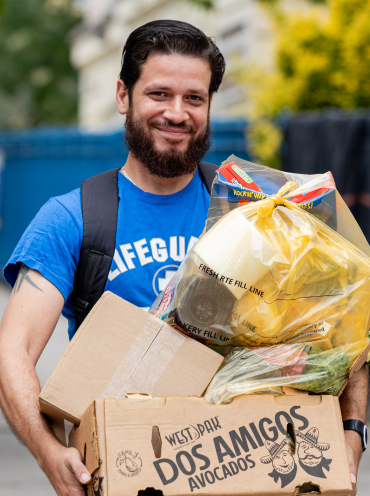
Just bring bags or a cart—it makes carrying food easier. That’s all you need.
Peter:
Does a particular family or individual come to mind that you’ve met and assisted?
Ron:
Yes. A mother and daughter once came to our warehouse asking for food. At the time, we didn’t have a pantry onsite, but I gave her directions to the nearest mobile pantry. As they turned to leave, her daughter asked, “Mommy, what are we going to eat for dinner tonight?” It broke my heart. We quickly put together some bags of food for them. That experience led to us opening a small pantry here so we never have to send anyone away again.
Peter:
That’s moving. Is there a misconception out there about the people you serve?
Ron:
Yes, a big one. People assume those who visit food pantries are poor or homeless. That’s not true. Most of the families we serve are working—some even own small businesses. They just can’t afford all their groceries. Hunger doesn’t look one way, and we’re working to change that misconception.
Peter:
What’s something you do at Food Bank For NYC that might surprise folks?
Ron:
We go beyond food distribution. We offer nutrition education, benefits assistance, and financial health programs. We serve the whole person, not just their meal.
Peter:
Ron Olaizola of Food Bank For NYC, thank you for what you do and for taking the time to speak with me on “Closer Look.” Before we go, what encouragement would you give to someone who’s having a tough time making ends meet but feels hesitant to ask for help?
Ron:
Never give up, and don’t be ashamed. You’re not alone—millions of people go through the same struggles. There are organizations like ours ready to help. And for those who can help, please advocate, donate, or volunteer. Even sharing about our work makes a difference.
Peter:
If you’d like more from my conversation with Ronald Olaizola of Food Bank For NYC, email us at closerlook@klove.com. For “Closer Look,” I’m Peter Kaye.
This has been K-LOVE “Closer Look.” Find us online at klove.com.